Mental Health Awareness Month
May 4, 2026
Dear Parents/Guardians,
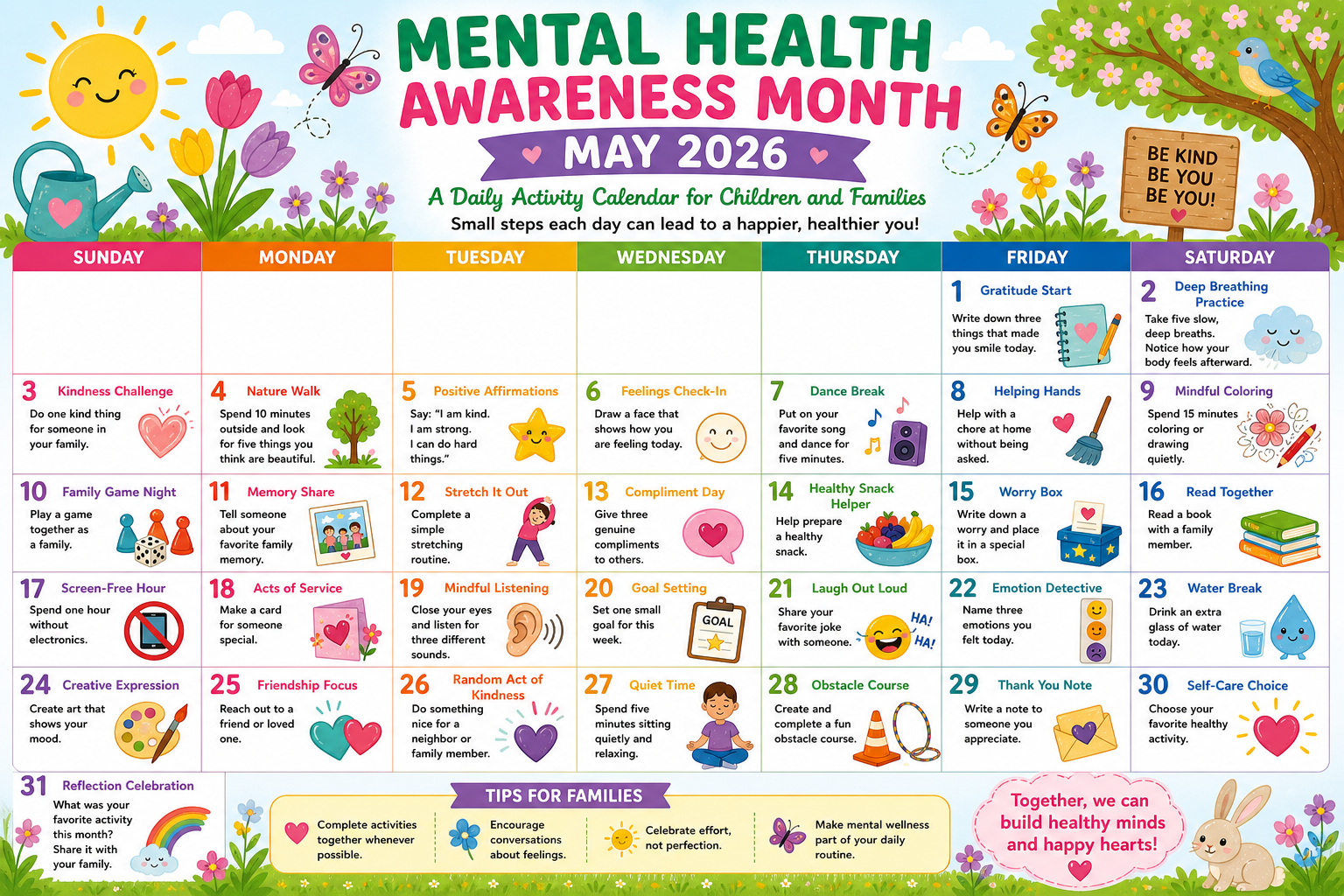
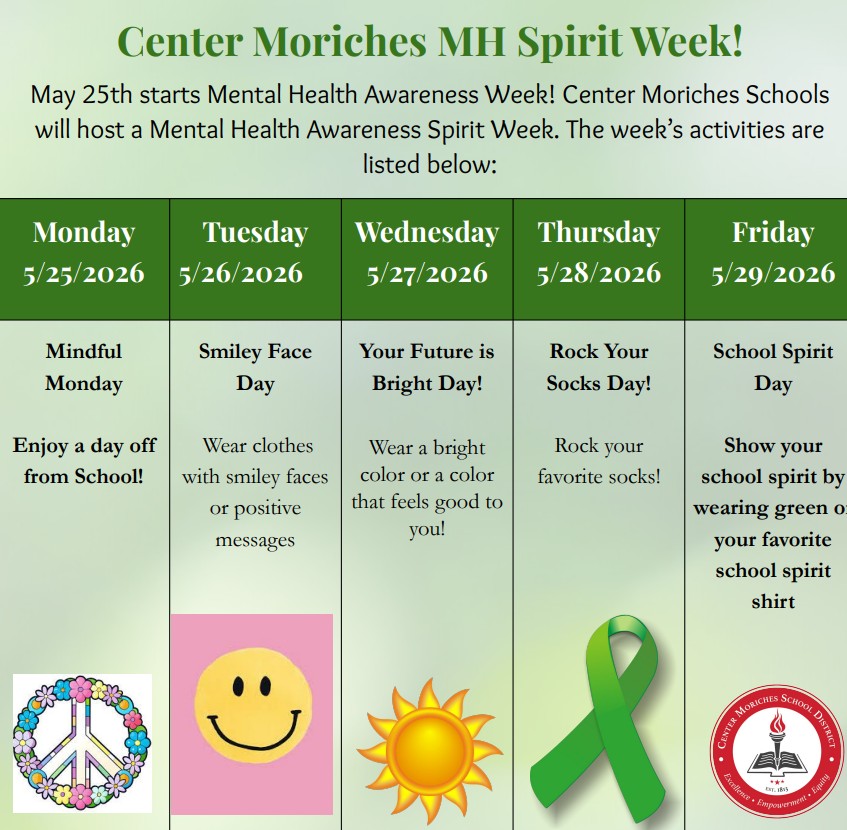
May is Mental Health Awareness Month. The Center Moriches School District will be recognizing World Mental Health Week from May 25th through May 29th. The goal of this week is to raise awareness about the importance of our children’s mental health. Children with positive mental health realize their full potential, successfully cope with the stressors in life, work productively, have good self-esteem, and confidence in new situations. During mental health spirit week we will focus on activities that promote well-being, mindfulness, exercise, and gratitude. All K-5 students will have the opportunity to foster positive mental health habits such as engaging in healthy communication, identifying their feelings, building strong relationships, as well as enhancing problem solving and decision making skills. Step into the fun by viewing our Mental Health Spirit week calendar (See Below).
During the month, our mental health team will be visiting classrooms to teach students about mental health. Additionally, we will be hosting a field day on May 29th, which will focus on team building and emotional wellness. To show unity, we invite all students to wear green or their favorite school spirit shirt on Friday, May 29th. As part of the mental health observances in May, we invite you to explore the linked calendar (see below) as we all take a moment to pause and breathe this month. Mental health has come a long way since the early nineties when the World Federation of Mental Health (WFMH) officially established the day. While 1 in 4 people will experience a mental illness during their lifetime, everyone faces challenges in life that can impact their mental health. As our community's understanding of mental health grows, we do too.
With Our Support,
Katharine Cunningham, School Psychologist
Rebecca McDermott, School Psychologist
Lauren Richard, School Social Worker
Taryn De Chadarevian, School Counselor
As a parent or caregiver, we know that you want the best for your child! Knowing what to look for and what to do should you have concerns about your child’s social emotional functioning is important. The following is information from mentalhealth.gov. It lists common warning signs of someone who may be struggling as well as tips on how to start a conversation with your child related to mental health. Parents play a crucial role in knowing when their child may need help. Consult with your child’s teacher, a school social worker or school psychologist, school nurse, or outside mental health provider if your child shows one or more of the following behaviors:
● Feeling very sad or withdrawn for more than two weeks
● Experiencing sudden overwhelming fear for no reason
● Getting in fights or wanting to hurt others
● Having intense worries that get in the way of daily activities
● Experiencing extreme difficulty controlling behavior, putting himself/ herself in physical danger or causing problems in school
● Showing drastic changes in behavior or personality
Feeling helpless or hopeless
● Hearing voices or believing things that are not true
● Having suicidal ideations, trying to harm himself/herself, or making plans to do so
If your child is struggling with mental health, here are some tips regarding how to start a conversation. Try leading with these open-ended questions and make sure you actively listen to your child's response.
● How are you feeling? Have you had feelings like this in the past?
● Can you tell me more about what is happening that is making you feel stressed/anxious/angry/sad, etc.?
● Sometimes you need to talk to an adult about your feelings. I'm here to listen. How can I help you feel better?
● Would you like to talk to someone else about your problem?
● I'm worried about your safety. Can you tell me if you have thoughts about harming yourself or others?
When talking about mental health problems with your child you should:
● Communicate in a straightforward manner
● Speak at a level that is appropriate to a child or adolescent's age and development level (preschool children need fewer details than teenagers)
● Discuss the topic when your child feels safe and comfortable
● Watch for reactions during the discussion and slow down or back up if your child becomes confused or looks upset
● Listen openly and let your child tell you about his or her feelings without judgment.
Additional resources: https://www.nami.org/mhstats National Alliance on Mental Illness https://www.mentalhealth.gov Mentalhealth.gov https://psychcentral.com/ PsychCentral.com